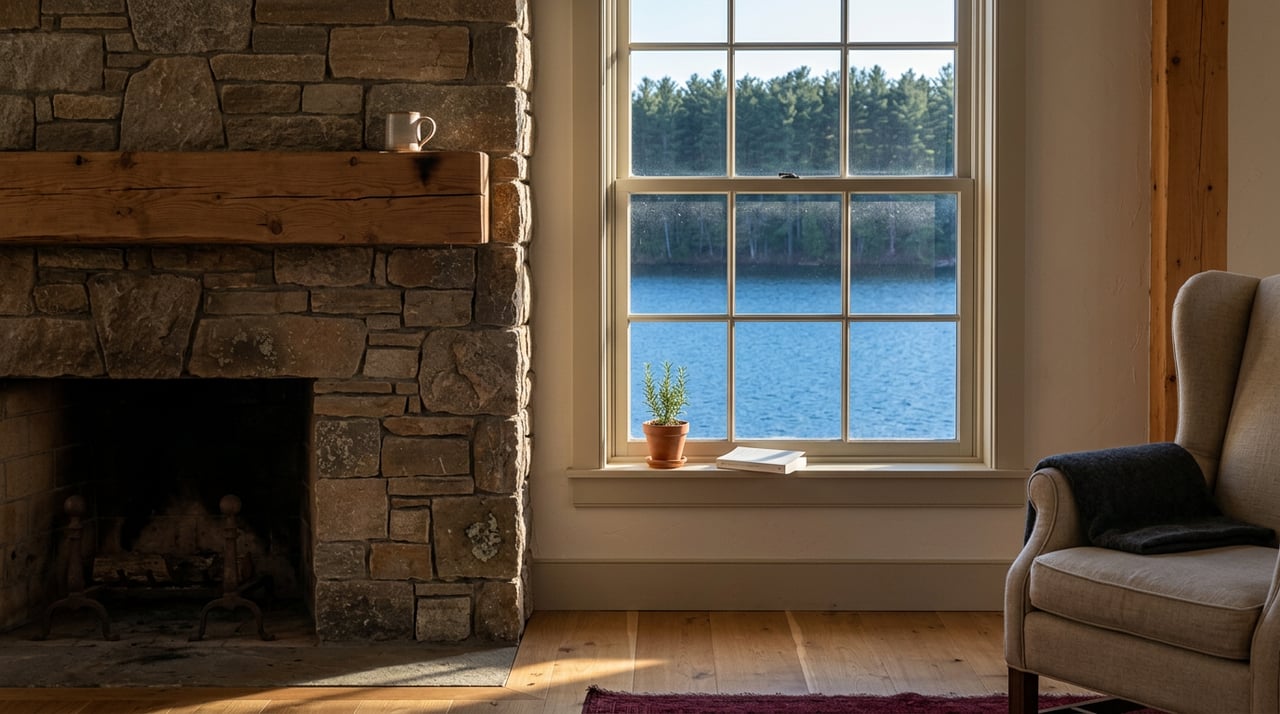
What Your Money Actually Buys on Governor's Island: Reading Gilford's Most Selective Waterfront Past the Median
August 6, 2026
August 6, 2026
A buyer scrolling Gilford listings will see a town-wide median that hovers in the mid-six figures, then a scattering of waterfront homes stretching past eight. It looks like a wide market with room to negotiate. Once you cross the small bridge onto Governor's Island, that read stops working.
The island is a separate market operating under different rules. Not zoning rules, though those matter, but the older kind: a fixed supply, a shared amenity structure that travels with every deed, and a set of state boat-slip regulations that quietly decide what a linear foot of shoreline is actually worth. This post is about that mechanism, and what it tells you before you tour a single property.
Waterfront value on Lake Winnipesaukee is not set by shoreline alone. It's set by shoreline plus what the state will let you build off of it. New Hampshire regulates dock size and boat-slip count under RSA 482-A, and Winnipesaukee sits in a category of one. Because it exceeds 10,000 acres, a single boat slip on this lake is legally defined as a volume 25 feet long, 8 feet wide, and 3 feet deep, larger than the standard slip on any other lake in the state.
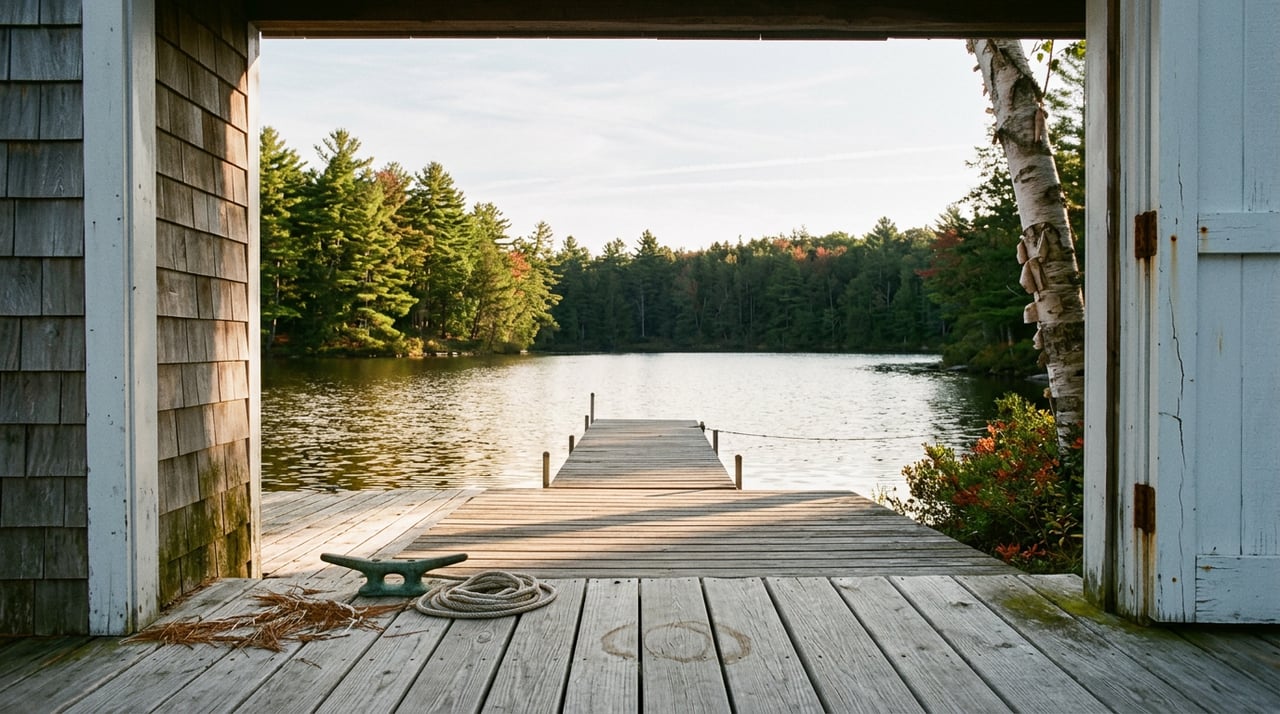
That definition matters at the purchase table. Under the Seasonal Dock Notification rules, ownership of 75 feet of shoreline frontage on Winnipesaukee allows a seasonal dock of up to 6 feet by 40 feet. Fewer frontage feet, or an irregular shoreline, and you're negotiating a smaller footprint or a wetlands permit process. On Governor's Island, where waterfront lots commonly show 100 to 300+ feet of frontage with stone breakwaters and covered docks already permitted, the existing dock is often the single most valuable non-structural asset on the parcel. Replacing it is a permit exercise, not a construction one.
Layer in the Shoreland Water Quality Protection Act, RSA 483-B, which regulates the first 250 feet inland from the reference line: a 50-foot primary building setback, a waterfront buffer managed by a 25-by-50-foot grid and point system, and a natural woodland buffer between 50 and 150 feet. These are the rules that decide whether an addition, a boathouse repair, or a new patio is a phone call or a nine-month application.
Buyers who understand this before they see the property spend their tour thinking about what's already permitted, not what could be built.
Governor's Island is 504 acres, roughly 1.8 miles long and 0.7 miles wide, bridged to the mainland by way of Route 11D. It is one of six bridged islands on Lake Winnipesaukee and the fourth largest of the lake's 274 islands. The community formed in 1935 after the previous developer's bankruptcy, when residents organized into what is now the Governor's Island Club.
The number that shapes today's market is small: about 190 platted home sites, of which roughly 170 are built. No further construction is permitted. The property owners on the island represent approximately 15% of the town of Gilford's total tax base, a figure that hints at how the assessed value stacks up against the rest of the town.
For a buyer, "no further construction" is not a marketing line. It's a supply cap. It means the market clears through renovation, expansion within existing footprints, and turnover of the 170-odd built lots rather than new inventory. When a waterfront lot changes hands on the island, the pool of possible substitutes doesn't grow. That absence of a release valve is why the two price tiers below hold their shape year over year.
Every deed on Governor's Island conveys membership in the Governor's Island Club and access to the same amenity set: clubhouse, sand beaches with stone breakwaters, tennis courts, playground, picnic area, and roughly 140 acres of preserved common woodlands with hiking, biking, and cross-country skiing trails. What varies is where the house sits.
Off-water association homes. These sit on the interior road network. Owners share full club access, including beach rights, and typically pay in the $1 million to $3 million range. A buyer here is purchasing the community, the woodland buffer, and the walk-to-beach lifestyle rather than a private dock. From a value standpoint, the off-water tier is the cleanest way to read the club's amenity premium in isolation. You can compare an interior Governor's Island home to a comparable Gilford home outside the association and the delta is close to what the club is worth to the market.
Waterfront lots and estates. These begin around $3 to $4 million for a buildable waterfront parcel and climb through the mid-eight figures for larger completed estates. The step up from off-water is not just "add a dock." It's dock, beach, breakwater, shoreline permitting history, view orientation, and the RSA 482-A slip count locked to that specific frontage. When a waterfront property trades on the island, the buyer is paying for a bundle the state won't let anyone replicate on new construction.
The gap between the two tiers is wider than typical waterfront markets, and the reason is regulatory rather than aesthetic. On a mainland lot with generous frontage, a buyer can sometimes add slips or a boathouse and close the value gap. On Governor's Island the waterfront count is already set and the interior lots have no path to the water. The tiers don't converge.
The Governor's Island Club amenities are not an HOA afterthought. They're a material component of value.
For second-home and legacy buyers who plan to host multiple generations, the amenity set solves a specific problem: young family members who don't have their own dock or beach access still have a place to swim, meet, and stay engaged with the property. That utility is part of why the off-water tier holds its price.
Gilford has real waterfront alternatives that a serious buyer should weigh against Governor's Island rather than treat as consolation choices.
Along the mainland shore and Paugus Bay, communities like Samoset offer docks, moorings, private beach, and pool in a townhouse format. Varney Point Association features private frontage lots with year-round homes and deeded dock rights. Eastern Shores on Paugus Bay carries a lower entry point for seasonal condo ownership. For boat storage without home ownership, deeded slips at Mountain View Yacht Club in Saunders Bay and at Gilford Yacht Club sell as discrete assets, occasionally alongside Silver Sands Marina availability.
Each of these is a different bundle of frontage, permitting, and community. The exercise for a buyer is honest math: if you don't intend to keep a 30-foot boat on your own dock, the case for a $4M+ waterfront lot weakens against a $1.5M off-water Governor's Island home plus a deeded slip elsewhere. The reverse holds if boating is the point of the purchase.
Redfin's Gilford snapshot showed a median waterfront list price around $600,000 with roughly nine waterfront homes for sale as of mid-2026, and homes staying on market about 36 days. That number blends condominium slips, seasonal cottages, Paugus Bay units, and mainland waterfront. It says almost nothing about Governor's Island, where a single sale can shift the tax rolls and where properties are described in the trade as rarely available. A recent listing preview on the island, mentioned by market watchers, was quoted around $7.5 million.
The takeaway is not that the median is wrong. It is that on this island the median is not the right instrument. Price is set by the fixed lot count, the club membership traveling with every deed, and the shoreline permits stapled to each waterfront parcel. Read those three inputs first and the listing sheets start making sense.
Are Governor's Island homes primarily second homes? Ownership skews toward established, largely owner-occupied households. The community reads as stable and residential rather than transient. Rental use is limited by the island's culture and by association norms rather than by strict prohibition.
Can I add a dock or expand an existing one after purchase? You can pursue permitting, but the state will decide. Any change to a dock's footprint typically triggers a wetlands permit under RSA 482-A. Repairs within the existing footprint conducted "in the dry" during drawdown are treated differently. Before you assume a shoreline can be reworked, review what's already permitted and what the current shoreline frontage supports.
How does the Governor's Island Club fee structure work? Membership is tied to ownership and funds the beaches, clubhouse, trails, and shared services. Dues and any assessments vary and should be reviewed as part of due diligence alongside town taxes.
Is there room to build new on the island? No further construction is permitted on the platted lot inventory. Most transactions involve either renovation of an existing home, redevelopment within an existing footprint, or purchase of one of the small number of remaining buildable lots.
Governor's Island rewards buyers who understand the mechanism before they walk the property. If you are weighing an offer here, or comparing it against a mainland Gilford alternative, the details worth reviewing early are the shoreline frontage on the deed, the permit history of the dock and any breakwater, the club documents, and the town's assessed value against recent island sales. Lakes Region Homes has worked this specific market for more than four decades, including boat-based showings that reveal what a road tour misses. Let's Connect when you're ready to look at the numbers behind a specific address.
Stay up to date on the latest real estate trends.
Led by Stephen Mardis, Lakes Region Homes is a trusted name in Lake Winnipesaukee waterfront real estate, luxury estates, and second-home properties. Through local expertise, skilled negotiation, and a client-first approach, Stephen delivers exceptional results throughout New Hampshire's Lakes Region.